"Little Girls Should Be Seen, Not Heard," She Was Told. Here's How One-Time Secretary Susan Eggers Defied Tradition—And Became The First Woman To Win Computer Architecture’s Top Award
By Lori Cameron and Michael Martinez
By Lori Cameron and Michael Martinez on
 For all her monumental achievements—going from secretary to professor at midlife and co-developing the first commercially viable multi-threaded architecture that was adopted by IBM, Intel, and Sun—the most unforgettable advice came early in life for Susan Eggers.
"Little girls should be seen, not heard," she recounted.
Good thing she didn't listen.
In an extraordinary journey defying generational values, Eggers switched careers near age 40, quitting her secretary job of 18 years to become a computer architect—all because she just happened to pick up a book about Fortran and discovered she had a genius for computing.
When she went back to school and wowed at a luncheon the likes of IBM's John Cocke—a winner of the Turing Award that's often called the "Nobel Prize for Computing"—Eggers' improbable path to success suddenly became real.
She eventually earned a PhD from the University of California, Berkeley, and in 1989, at age 47, she joined the faculty at the University of Washington, where she rose to professor emerita of computer science and engineering.
Her pioneering in technology was affirmed in June when peers awarded her the top honor in the field of computer architecture—the Eckert-Mauchly Award given by the IEEE Computer Society and the Association of Computing Machinery.
For all her monumental achievements—going from secretary to professor at midlife and co-developing the first commercially viable multi-threaded architecture that was adopted by IBM, Intel, and Sun—the most unforgettable advice came early in life for Susan Eggers.
"Little girls should be seen, not heard," she recounted.
Good thing she didn't listen.
In an extraordinary journey defying generational values, Eggers switched careers near age 40, quitting her secretary job of 18 years to become a computer architect—all because she just happened to pick up a book about Fortran and discovered she had a genius for computing.
When she went back to school and wowed at a luncheon the likes of IBM's John Cocke—a winner of the Turing Award that's often called the "Nobel Prize for Computing"—Eggers' improbable path to success suddenly became real.
She eventually earned a PhD from the University of California, Berkeley, and in 1989, at age 47, she joined the faculty at the University of Washington, where she rose to professor emerita of computer science and engineering.
Her pioneering in technology was affirmed in June when peers awarded her the top honor in the field of computer architecture—the Eckert-Mauchly Award given by the IEEE Computer Society and the Association of Computing Machinery.
How Susan Eggers trailblazed in computer architecture
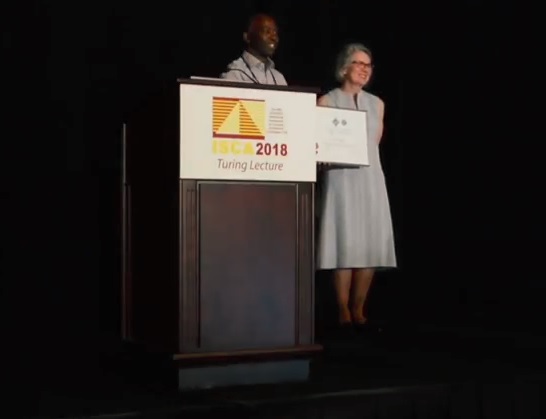
Eggers is the first woman ever to receive the award, which has a 39-year history. The prize recognizes contributions to computer and digital systems architecture, citing Eggers "for outstanding contributions to simultaneous multi-threaded (SMT) processor architectures and multiprocessor sharing and coherency." When innovation exploded in the 1990s under Moore's Law—the prediction that transistors could be doubled on chips each year—the leaps in logic and memory didn't translate to big boosts in performance. Eggers asserted that parallelism—a computer’s ability to perform many calculations at the same time—was the best way to increase performance, though she faced enormous skepticism. "Today, SMT architecture as developed by Eggers and her colleagues remains an essential component in the processors of commercial manufacturers, including Intel and IBM," the award organizers said. They added that "earlier in her career, she initiated technology transfer of SMT to product teams at IBM, Fujitsu, MemoryLogix and Sun Microsystems." Professors and industry professionals applauded her when she took the stage and gave an acceptance speech in a downtown Los Angeles hotel during the International Symposium on Computer Architecture, which drew a record crowd of 800 people this year.In her Eckert-Mauchly Award acceptance speech at the 45th ISCA Conference, Susan Eggers said, “In my view, there are numerous women who could be standing here. It just happens to be me. And, at least, in my opinion, the important event is that the technical work of a female architect has been recognized. I hope it continues."
Eggers summarized her journey from humble beginnings as a secretary at Yale University, where she worked for almost two decades, and described how society once constrained a woman's pursuit of a career. In a male-dominated field, she knew what she was up against. "I became involved in the nascent, national women's movement, which gave me a very different mindset about what a woman could say, what a woman could be or think. That a woman could have a career! This was really important. I had been raised in the 50s when little girls should to be seen, not heard. And I was having rather a hard time doing that," she said. Eggers remembers when her life changed: "I had a bit of a circuitous route to becoming a computer architect. In 1965, right out of college, I was a secretary in the economics department at Yale. One day, my boss asked me to write a computer program that would multiply matrices. "Previously, I had been doing these calculations manually on a calculator. So I bought a book on Fortran, I read it over the weekend, and I was totally transformed. Computer programming, as it turns out, is intellectually very much the same as devising the offensive strategy in bridge. So, I stopped playing bridge, stopped being a secretary, and became a programmer." See full calendar of IEEE Computer Society conferences"Who is that girl from systems?"
 To do so, she enrolled as a graduate student at Berkeley. There, Eggers joined several other students for lunch with IBM's Cocke, whose IBM team created the first prototype computer employing reduced instruction set computer (RISC) architecture. Cocke was giving a campus talk at the request of David Patterson, a professor of computer science and Turing Award winner as well.
The students were scared to death.
But Cocke proved to be friendly and approachable and—in Eggers words—a "Southern gentleman."
Toward the end of the meal, he asked the students what they were working on.
The first student said "I'm in systems," and the second student said, pointing to the first, "I do what he does."
When he reached Eggers, however, she rolled out some carefully rehearsed elevator talk, something she said helped her have conversations "on the fly."
"I said, 'This the problem I'm working on. This is why it's an important problem. This is the tack of my solution. And this is how my solution is different from the rest of the pack,' " Eggers recalls.
As they walked out of the restaurant, Cocke asked Patterson, "Who is that girl from systems?"
She was far from it. But now her talent was leaving impressions on the right people.
To do so, she enrolled as a graduate student at Berkeley. There, Eggers joined several other students for lunch with IBM's Cocke, whose IBM team created the first prototype computer employing reduced instruction set computer (RISC) architecture. Cocke was giving a campus talk at the request of David Patterson, a professor of computer science and Turing Award winner as well.
The students were scared to death.
But Cocke proved to be friendly and approachable and—in Eggers words—a "Southern gentleman."
Toward the end of the meal, he asked the students what they were working on.
The first student said "I'm in systems," and the second student said, pointing to the first, "I do what he does."
When he reached Eggers, however, she rolled out some carefully rehearsed elevator talk, something she said helped her have conversations "on the fly."
"I said, 'This the problem I'm working on. This is why it's an important problem. This is the tack of my solution. And this is how my solution is different from the rest of the pack,' " Eggers recalls.
As they walked out of the restaurant, Cocke asked Patterson, "Who is that girl from systems?"
She was far from it. But now her talent was leaving impressions on the right people.
A community "not completely welcoming"
From that single conversation came an IBM fellowship, which paid for three years of graduate school for Eggers. Then came multiple job offers from IBM, more than any other woman had received from IBM at that time—all of which she turned down in favor of teaching, she said. Nonetheless, when she chose academia, IBM funded her compiler research for several years. Cocke was behind it all. Throughout her career, Eggers seems to have moved mountains. Simultaneous multi-threaded (SMT) processors are now recognized as one of the most important developments in computer architecture in the past 30 years. Yet when Eggers initially advanced the idea, experts chafed.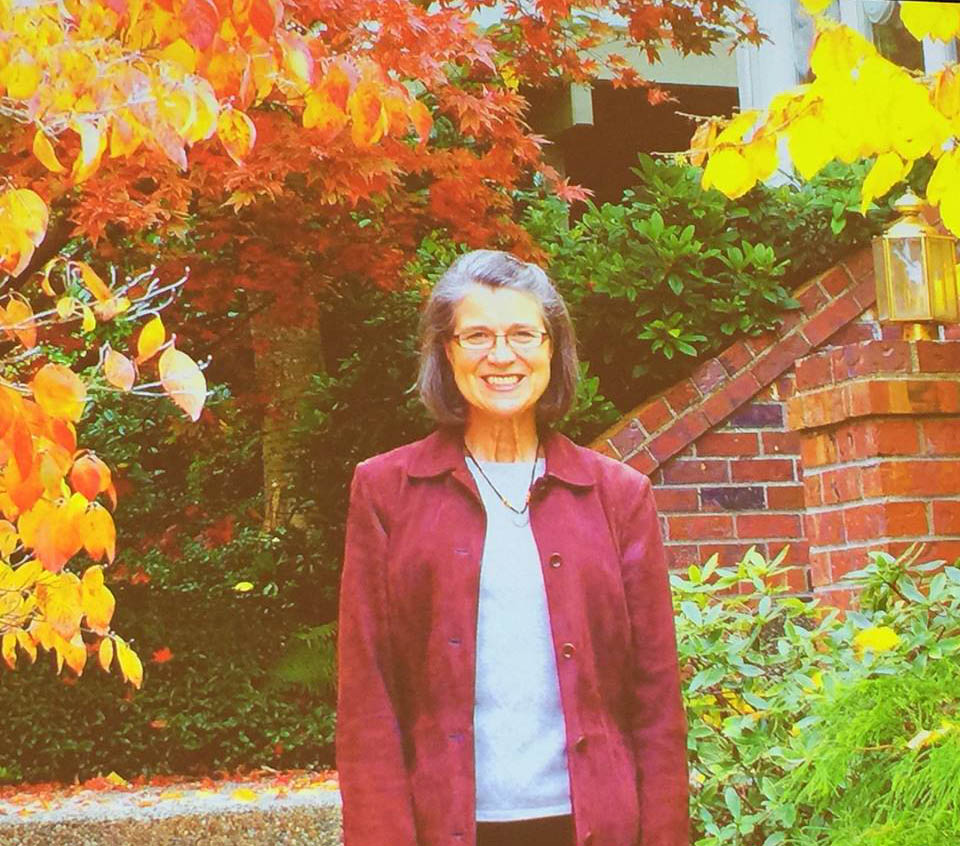
"I would note that the initial reception of SMT was not completely welcoming by the computer architecture community," said Kunle Olukotun, a professor of electrical engineering and computer science at Stanford University who's also a pioneer in multicore processor design and the leader of the Stanford Hydra chip multi-processor (CMP) research project.
"But, led by Eggers, she and her co-authors responded to the resistance with a series of studies that thoroughly proved the benefit and practicality of the concept," he said.
In fact, two of Eggers' studies won back-to-back ISCA "most influential paper" awards, in 2010 and 2011, a high achievement, Olukotun said.
Now in her 70s, Eggers looked back on her life and passed along some advice.
"One is, find out what you're good at and what you're not good at, and compensate for the latter," she said.
"And second [realize] how valuable mentors are. Get one. Or actually, get several. They won't leave you. And they really are invaluable."
Since retiring from the University of Washington, Eggers transformed a half acre of her spacious backyard from blackberries, horsetails, and bog into a lovely garden with small trees, shrubs, and perennials, as well as stone paths weaving up the hillside, and a stream running down it.
Call it another career change—from computer architect to landscape architect.
"It's open to the public in some form every year. I love it," Eggers said.
For someone who manages her free time "with a vengeance," she added: "I would say retirement is also not so bad."
Research by Susan Eggers in the Computer Society Digital Library:
- Simplicity Versus Accuracy in a Model of Cache Coherency Overhead
- Simultaneous multithreading: Maximizing on-chip parallelism
- Micro News
- On the validity of trace-driven simulation for multiprocessors
- The effect on RISC performance of register set size and structure versus code generation strategy
- Tuning compiler optimizations for simultaneous multithreading
- Exploiting Choice: Instruction Fetch and Issue on an Implementable Simultaneous Multithreading Processor
 About Lori Cameron
Lori Cameron is a Senior Writer for the IEEE Computer Society and currently writes regular features for Computer magazine, Computing Edge, and the Computing Now and Magazine Roundup websites. Contact her at l.cameron@computer.org. Follow her on LinkedIn.
About Lori Cameron
Lori Cameron is a Senior Writer for the IEEE Computer Society and currently writes regular features for Computer magazine, Computing Edge, and the Computing Now and Magazine Roundup websites. Contact her at l.cameron@computer.org. Follow her on LinkedIn.
 About Michael Martinez
Michael Martinez, the editor of the Computer Society's website and its social media, has covered technology as well as global events while on the staff at CNN, Tribune Co. (based at the Los Angeles Times), and the Washington Post. He welcomes email feedback, and you can also follow him on LinkedIn.
About Michael Martinez
Michael Martinez, the editor of the Computer Society's website and its social media, has covered technology as well as global events while on the staff at CNN, Tribune Co. (based at the Los Angeles Times), and the Washington Post. He welcomes email feedback, and you can also follow him on LinkedIn.


