Creating a Better Smart Environment: How IoT and Big Data Borrowed Psychology's Trans-Theoretical Model to Get Us to Conserve More Energy
By Lori Cameron
By Lori Cameron on
 Two things drive the building and operation of smart cities: gathering data from the environment and allowing people to use that data in a meaningful way—sometimes to change behavior.
While making strange bedfellows of computer scientists and psychologists, the "trans-theoretical model of behavior change" is proving to be key in building smart environments.
"The model has been developed and applied primarily within the field of healthcare, for example, in exercise and addiction treatment," say researchers from the National University of Ireland, Galway and Ultra4, Greece.
The same principle can be used to get people to conserve energy. For example, a smart environment can gather water and energy usage data from sensors, send that data to smart devices, and allow users to reduce their water and energy use accordingly.
"A key driver in the development of smart environments is the convergence of technologies such as the Internet of Things (IoT) and big data, which are driving the digitization of physical infrastructures with sensors, networks, and social capabilities. Smart environments, leveraging IoT, can support the development of resource management (for example, water/energy) applications for efficient and effective use of the resource within the environment," say the authors in their article "Internet of Things Enhanced User Experience for Smart Water and Energy Management" (login may be required for full text) in IEEE Internet Computing.
Two things drive the building and operation of smart cities: gathering data from the environment and allowing people to use that data in a meaningful way—sometimes to change behavior.
While making strange bedfellows of computer scientists and psychologists, the "trans-theoretical model of behavior change" is proving to be key in building smart environments.
"The model has been developed and applied primarily within the field of healthcare, for example, in exercise and addiction treatment," say researchers from the National University of Ireland, Galway and Ultra4, Greece.
The same principle can be used to get people to conserve energy. For example, a smart environment can gather water and energy usage data from sensors, send that data to smart devices, and allow users to reduce their water and energy use accordingly.
"A key driver in the development of smart environments is the convergence of technologies such as the Internet of Things (IoT) and big data, which are driving the digitization of physical infrastructures with sensors, networks, and social capabilities. Smart environments, leveraging IoT, can support the development of resource management (for example, water/energy) applications for efficient and effective use of the resource within the environment," say the authors in their article "Internet of Things Enhanced User Experience for Smart Water and Energy Management" (login may be required for full text) in IEEE Internet Computing.
The smart environment is where the Internet of Things (IoT) and Big Data meet
The researchers start with an analysis of how the Internet of Things (IoT) and Big Data converge to form the smart environment.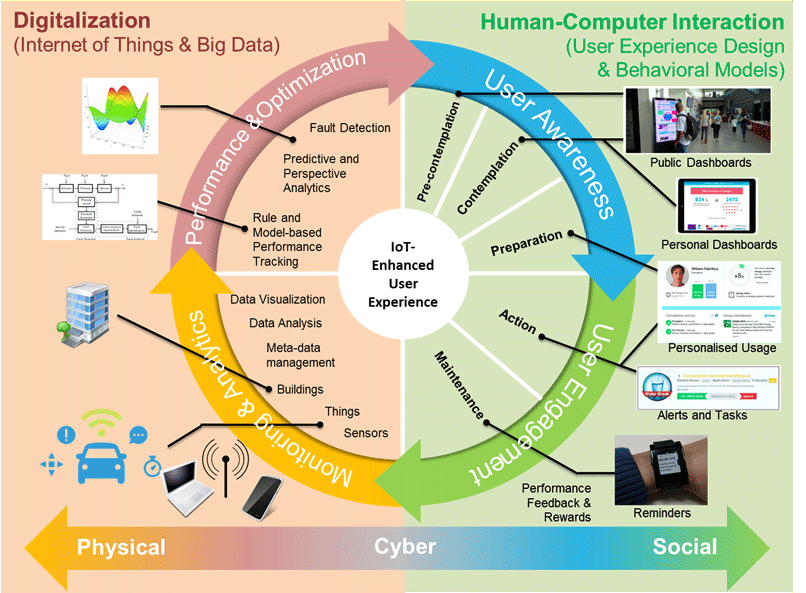
The trans-theoretical model of behavior change
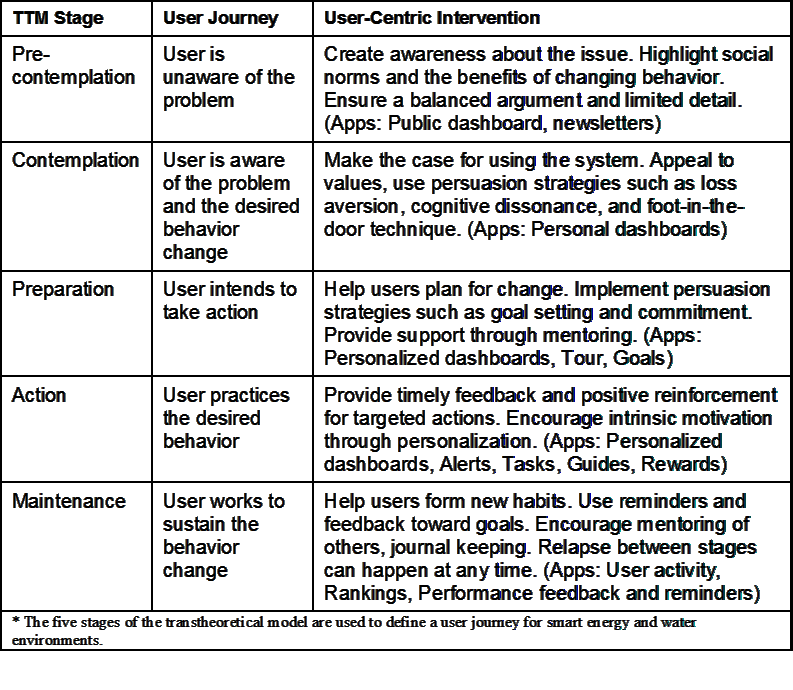
Then, in order to design an effective user experience, the researchers gathered information from numerous disciplines, including behavioral science, to build an effective smart environment framework. "Building effective IoT applications for smart environments requires the combination of technology, techniques, and skills from multiple disciplines, from electronic engineering, data engineering, and data science, to user experience design and behavioral science. A key challenge in delivering smart environments is creating an effective user experience with new digital infrastructures," say the authors. They borrowed a 1970s concept from the world of psychotherapy called the "trans-theoretical model of behavior change" to create the human-computer interaction (HCI) framework for smart cities.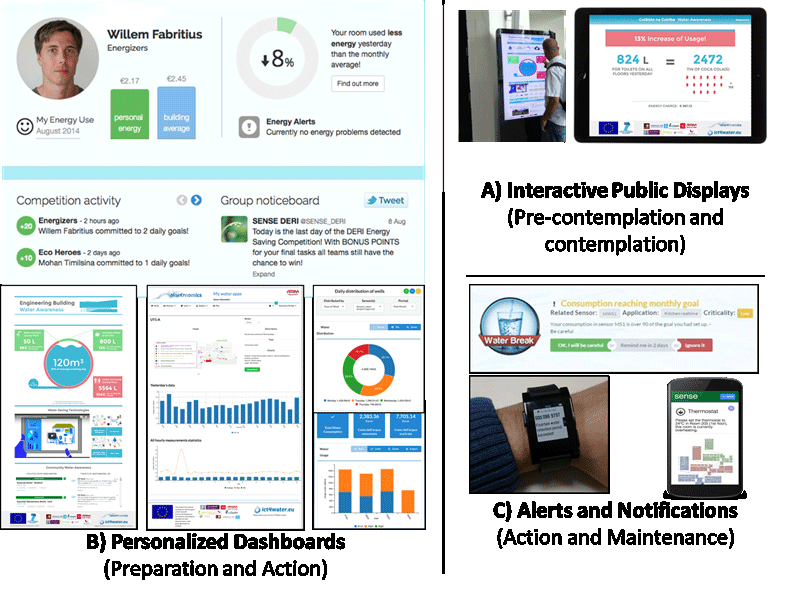
Want more tech news? Subscribe to ComputingEdge Newsletter Today!
Testing the trans-theoretical model of behavior change
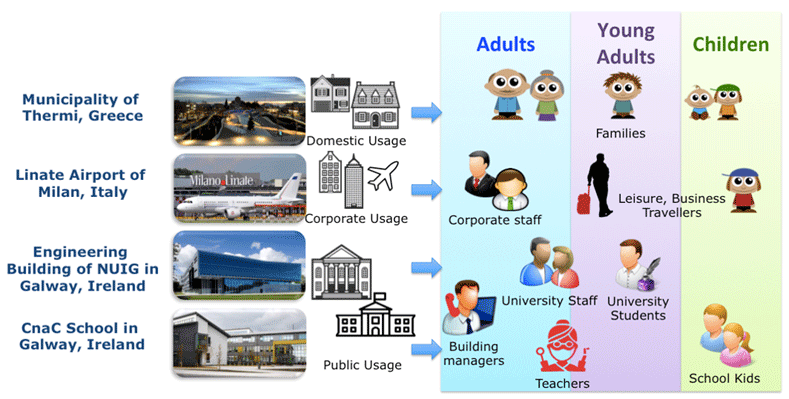
To test the TTM, the researchers used a variety of smart environments scattered across Italy, Greece, and Ireland. During the testing period, they gathered extensive data and feedback from the different user groups.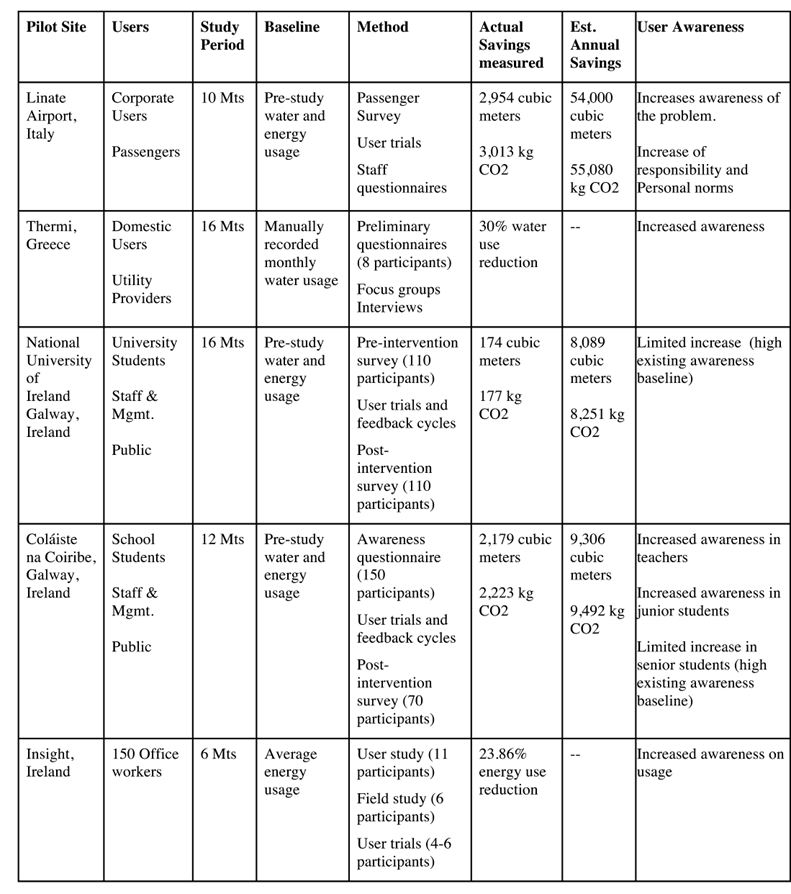
- Minimize cognitive overload with clear and focused applications and visualizations.
- Understand your users’ needs and their journey.
- Remember that social influence and interaction are strong motivators.
- Close the feedback loop with personalization.
- Bring your "humans in the loop" of the smart environment.
- Carefully use targeted alerts and notifications.
Real-time Linked Dataspace manages everything
Within each of the pilots, data management was provided by a Real-time Linked Dataspace (RLD) that links "pay-as-you-go" dataspaces with the needs of different users. The RLD manages the relationships among devices, sensors, datasets and users. "The RLD goes beyond a traditional dataspace approach by supporting the management of entities within the smart environment as first-class citizens along with data sources, and it extends the dataspace support platform with unified queries across live streams, historical data, and entities," the authors say.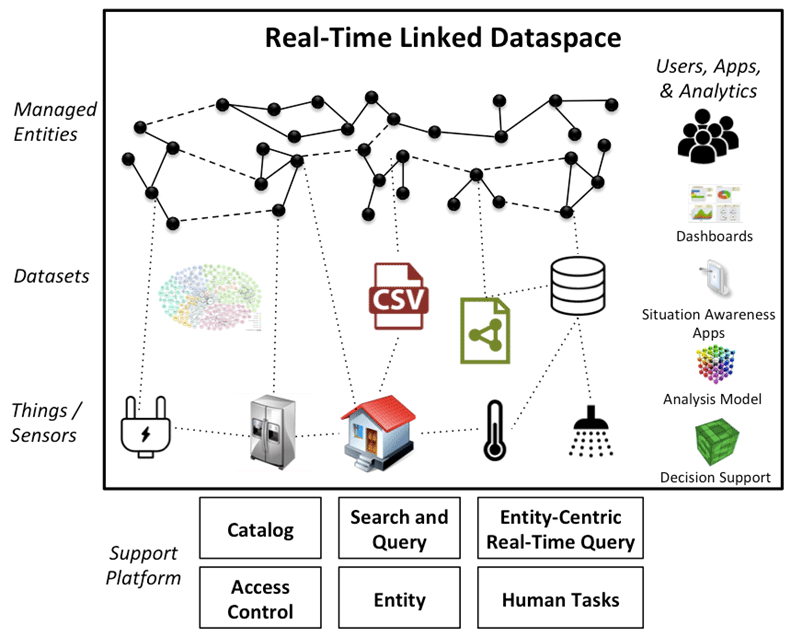
Related research on smart cities and environments in the Computer Society Digital Library
Login may be required for full text.- Smart Infrastructure Design for Smart Cities
- The Smart Citizen Factor in Trustworthy Smart City Crowdsensing
- Fog Computing for Smart Living
- Smart Spaces
- Practical Correctness in ICT Environments
- Topology-Aware Access Control of Smart Spaces
- Virtual Edge-Based Smart Community Network Management
 About Lori Cameron
Lori Cameron is a Senior Writer for the IEEE Computer Society and currently writes regular features for Computer magazine, Computing Edge, and the Computing Now and Magazine Roundup websites. Contact her at l.cameron@computer.org. Follow her on LinkedIn.
About Lori Cameron
Lori Cameron is a Senior Writer for the IEEE Computer Society and currently writes regular features for Computer magazine, Computing Edge, and the Computing Now and Magazine Roundup websites. Contact her at l.cameron@computer.org. Follow her on LinkedIn.


Read Next


