• IEEE.org
  • IEEE CS Standards
  • Career Center
  • About Us
  • Subscribe to Newsletter

0

IEEE
CS Logo
  • MEMBERSHIP
  • CONFERENCES
  • PUBLICATIONS
  • EDUCATION & CAREER
  • VOLUNTEER
  • ABOUT
  • Join Us
CS Logo

0

IEEE Computer Society Logo
Sign up for our newsletter
FacebookTwitterLinkedInInstagramYoutube
IEEE COMPUTER SOCIETY
About UsBoard of GovernorsNewslettersPress RoomIEEE Support CenterContact Us
COMPUTING RESOURCES
Career CenterCourses & CertificationsWebinarsPodcastsTech NewsMembership
BUSINESS SOLUTIONS
Corporate PartnershipsConference Sponsorships & ExhibitsAdvertisingRecruitingDigital Library Institutional Subscriptions
DIGITAL LIBRARY
MagazinesJournalsConference ProceedingsVideo LibraryLibrarian Resources
COMMUNITY RESOURCES
GovernanceConference OrganizersAuthorsChaptersCommunities
POLICIES
PrivacyAccessibility StatementIEEE Nondiscrimination PolicyIEEE Ethics ReportingXML Sitemap

Copyright 2025 IEEE - All rights reserved. A public charity, IEEE is the world’s largest technical professional organization dedicated to advancing technology for the benefit of humanity.

  • Home
  • /Publications
  • /Tech News
  • /Research
  • Home
  • / ...
  • /Tech News
  • /Research

Researchers Work To Build More Fuel-Efficient Engines Using Supercomputing and a Brand New Fuel

by Lori Cameron

By Lori Cameron on
February 14, 2019

Featured ImageFeatured ImageFifteen billion barrels of oil were burned worldwide last year—sending chemical gases, particulates, and petroleum hydrocarbons into the air, pollution that found its way into the cells of human bodies, the upper atmosphere, and all ecosystems and biomes in between.

The economic and environmental impact has alarmed environmentalists—prompting government and industry initiatives designed to drastically accelerate solutions to the enormous energy, security, and health problems facing the nation.

Stay ahead in your field and sign up here for our Build Your Career or Computing Edge newsletters to get content like this delivered right to your inbox weekly.

Recently, an industry-led research team at the U.S. Department of Energy’s Argonne National Laboratory used the IBM Blue Gene/Q Mira supercomputer to simulate about 2,000 engine design combinations in a matter of days.
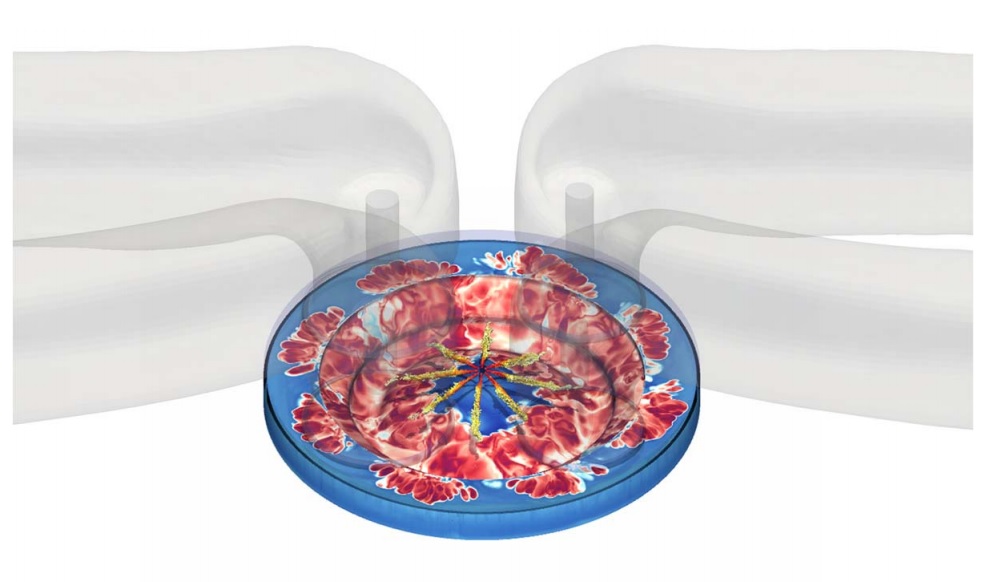
heavy-duty engineheavy-duty engine
Visualization snapshot of a high-fidelity simulation of a heavy-duty engine fueled with a straight-run gasoline performed on the Mira supercomputer by researchers from Argonne National Laboratory, Aramco Research Center–Detroit, and Convergent Science Inc. The simulation has more than 100 million cells and is the largest engine simulation ever performed. This research provided unique insights about fuel-air mixing that enabled further engine optimization.

The team used this approach to optimize the fuel spray and combustion bowl geometry of a heavy-duty diesel engine.

The accelerated simulation time allowed the team to evaluate an unprecedented number of design variations and improve the production design using a new gasoline-like fuel with longer ignition delay and better fuel-air mixing capabilities.

They initially claimed even a 1 percent improvement in engine efficiency can save billions of gallons of fuel annually.

When all was said and done, their system created an engine efficiency of more than 4 percent.

Not bad at all.

Read more in "HPC Opens a New Frontier in Fuel-Engine Research."


About Lori Cameron

Lori Cameron is Senior Writer for IEEE Computer Society publications and digital media platforms with over 20 years extensive technical writing experience. She is a part-time English professor and winner of two 2018 LA Press Club Awards. Contact her at l.cameron@computer.org. Follow her on LinkedIn.

LATEST NEWS
IEEE Computer Society Announces 2026 Class of Fellows
MicroLED Photonic Interconnects for AI Servers
Vishkin Receives 2026 IEEE Computer Society Charles Babbage Award
Empowering Communities Through Digital Literacy: Impact Across Lebanon
From Isolation to Innovation: Establishing a Computer Training Center to Empower Hinterland Communities
Get the latest news and technology trends for computing professionals with ComputingEdge
Sign up for our newsletter
Read Next

IEEE Computer Society Announces 2026 Class of Fellows

MicroLED Photonic Interconnects for AI Servers

Vishkin Receives 2026 IEEE Computer Society Charles Babbage Award

Empowering Communities Through Digital Literacy: Impact Across Lebanon

From Isolation to Innovation: Establishing a Computer Training Center to Empower Hinterland Communities

IEEE Uganda Section: Tackling Climate Change and Food Security Through AI and IoT

Blockchain Service Capability Evaluation (IEEE Std 3230.03-2025)

Autonomous Observability: AI Agents That Debug AI