As Diabetes Deaths Skyrocket Worldwide, Researchers Devise New Insulin Therapy Model Using Real-Time Datastreaming
By Lori Cameron and Michael Martinez
 As diabetes threatens to become the biggest epidemic of the 21st Century, scientists have devised a datastream mining approach to computationally derive real-time decision rules for type-1 diabetes therapy.
Researchers are calling their work a "new breed of computational methods" that is enabled by the datastream mining and is based on insulin prescription records and patients' blood-glucose.
"Our model can assist healthcare experts in finding a suitable dosage and the correct timing of insulin administration based on decision rules so that the fluctuation of blood-glucose concentrations can be regulated to a stable level. The decision rules are patient-specific and can be applied to some personalized diabetic advisor, customized to a patient’s lifestyle and health requirements," write Simon Fong, Jinan Fiaidhi, Sabah Mohammed, and Luiz A.M. Moutinho who co-authored "Managing Diabetes Therapy through Datastream Mining," (login may be required for full text) which appears in the September/October 2017 issue of IT Professional.
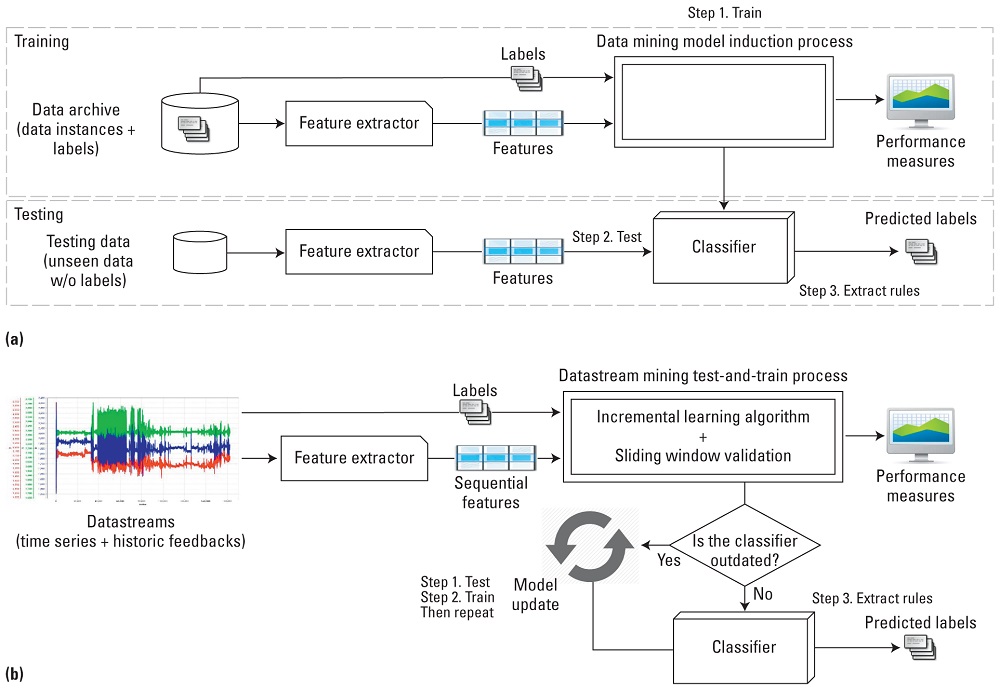
The new model differs from the traditional data mining process, which deploys a train-then-test approach in which a classification model must first be induced from a full batch of historical data before it becomes useful for testing with unseen samples.
"Our proposed method of decision-rule generation is extended from a datastream mining process," the authors say.
Their datastream mining model also intertwines the test-and-train steps, they add.
“Decisions are based on the patient’s own current health conditions, not general historical data of a population over several years. Hence, the rules more accurately predict whether a medical problem will occur, given that glucose levels fluctuate because of lifestyle changes, medication type, or other external factors,” say the authors.
The World Health Organization’s latest figures show that the number of people worldwide with diabetes has skyrocketed from 153 million in 1980 to 422 million in 2016.
To make matters worse, the number of diabetes-related deaths has reached almost four million each year, a staggering number in spite of increased medical and technological efforts to treat the disease.
Many of these deaths are caused by a simple failure to keep blood sugar at healthy levels. The key is to monitor blood glucose levels continually throughout the day and administer the right amount of insulin— at just the right time—to keep blood sugar levels in check. If not, patients are at risk for slipping into a diabetic coma. If they do not receive help quickly, they will die.
Current research has focused on developing tools to predict insulin levels in diabetes patients and offer recommended insulin dosages and treatment. However, most of these tools function according to static population data. Patients can enter their weight and age, but the remaining personal information related to their own body, lifestyle, and eating habits is left out. Some monitoring tools predict patient behavior and diet based on historical data, but even those methods fall short. Timing and accuracy are crucial.
“Due to their varying physiological characteristics, patients react differently to exogenous insulin. Moreover, bodily reactions to insulin can change over time, even for the same person, because of lifestyle alterations. Factors that are known to influence blood-glucose concentrations include body-mass ratio, hormone balance, mental state, diet, and physical exercise. The last two variables, together with a patient’s course of insulin intakes, form a dynamic intervention pattern,” write the researchers, who are from the University of Macau, Lakehead University in Canada, and Dublin City University.
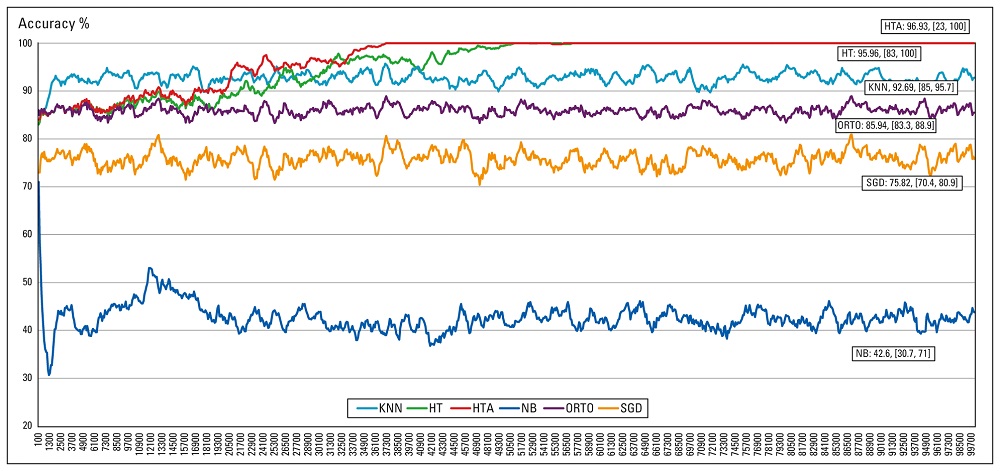
The authors conducted a computer simulation experiment for evaluating the most suitable datastream algorithms with respect to accuracy and speed. Out of six algorithms tested, two of them could reach an equilibrium of accuracy at high values—95.96 and 96.93 percent, respectively.
While the accuracy of the datastream algorithm matched that of traditional data mining methods, it exceeded those methods in one critical area—speed. When the threat of diabetic coma—subsequent death—looms large for all insulin-dependent diabetes patients, time is of the essence.
Related research on diabetes and health monitoring in the Computer Society Digital Library
Login may be required for full text.
- Identifying adverse drug events from patient social media: A case study for diabetes
- Real-time Decision Rules for Diabetes Therapy Management by Data Stream Mining
- A Context-Aware, Interactive M-Health System for Diabetics
- An Interactive Telecare System Enhanced with IoT Technology
- Personal Health Records: New Means to Safely Handle our Health Data?

About Lori Cameron
Lori Cameron is a Senior Writer for the IEEE Computer Society and currently writes regular features for Computer magazine, Computing Edge, and the Computing Now and Magazine Roundup websites. Contact her at l.cameron@computer.org. Follow her on LinkedIn.

About Michael Martinez
Michael Martinez, the editor of the Computer Society's website and its social media, has covered technology as well as global events while on the staff at CNN, Tribune Co. (based at the Los Angeles Times), and the Washington Post. He welcomes email feedback, and you can also follow him on LinkedIn.


