• IEEE.org
  • IEEE CS Standards
  • Career Center
  • About Us
  • Subscribe to Newsletter

0

IEEE
CS Logo
  • MEMBERSHIP
  • CONFERENCES
  • PUBLICATIONS
  • EDUCATION & CAREER
  • VOLUNTEER
  • ABOUT
  • Join Us
CS Logo

0

IEEE Computer Society Logo
Sign up for our newsletter
IEEE COMPUTER SOCIETY
About UsBoard of GovernorsNewslettersPress RoomIEEE Support CenterContact Us
COMPUTING RESOURCES
Career CenterCourses & CertificationsWebinarsPodcastsTech NewsMembership
BUSINESS SOLUTIONS
Corporate PartnershipsConference Sponsorships & ExhibitsAdvertisingRecruitingDigital Library Institutional Subscriptions
DIGITAL LIBRARY
MagazinesJournalsConference ProceedingsVideo LibraryLibrarian Resources
COMMUNITY RESOURCES
GovernanceConference OrganizersAuthorsChaptersCommunities
POLICIES
PrivacyAccessibility StatementIEEE Nondiscrimination PolicyIEEE Ethics ReportingXML Sitemap

Copyright 2025 IEEE - All rights reserved. A public charity, IEEE is the world’s largest technical professional organization dedicated to advancing technology for the benefit of humanity.

  • Home
  • /Publications
  • /Tech News
  • /Research
  • Home
  • / ...
  • /Tech News
  • /Research

Defining "Bad Smells" Specifically for Cloud-Native Applications Based on Microservices

By Lori Cameron

By Lori Cameron on
August 3, 2018

Featured ImageFeatured ImageCode smells and architectural smells—also called bad smells—are symptoms of poor design that can hinder code understandability and decrease maintainability.

Several bad smells have been defined in the literature for both generic architectures and specific architectures. However, cloud-native applications based on microservices can be affected by their own unique issues, say the authors of "On the Definition of Microservice Bad Smells" in the May/June issue of IEEE Software.

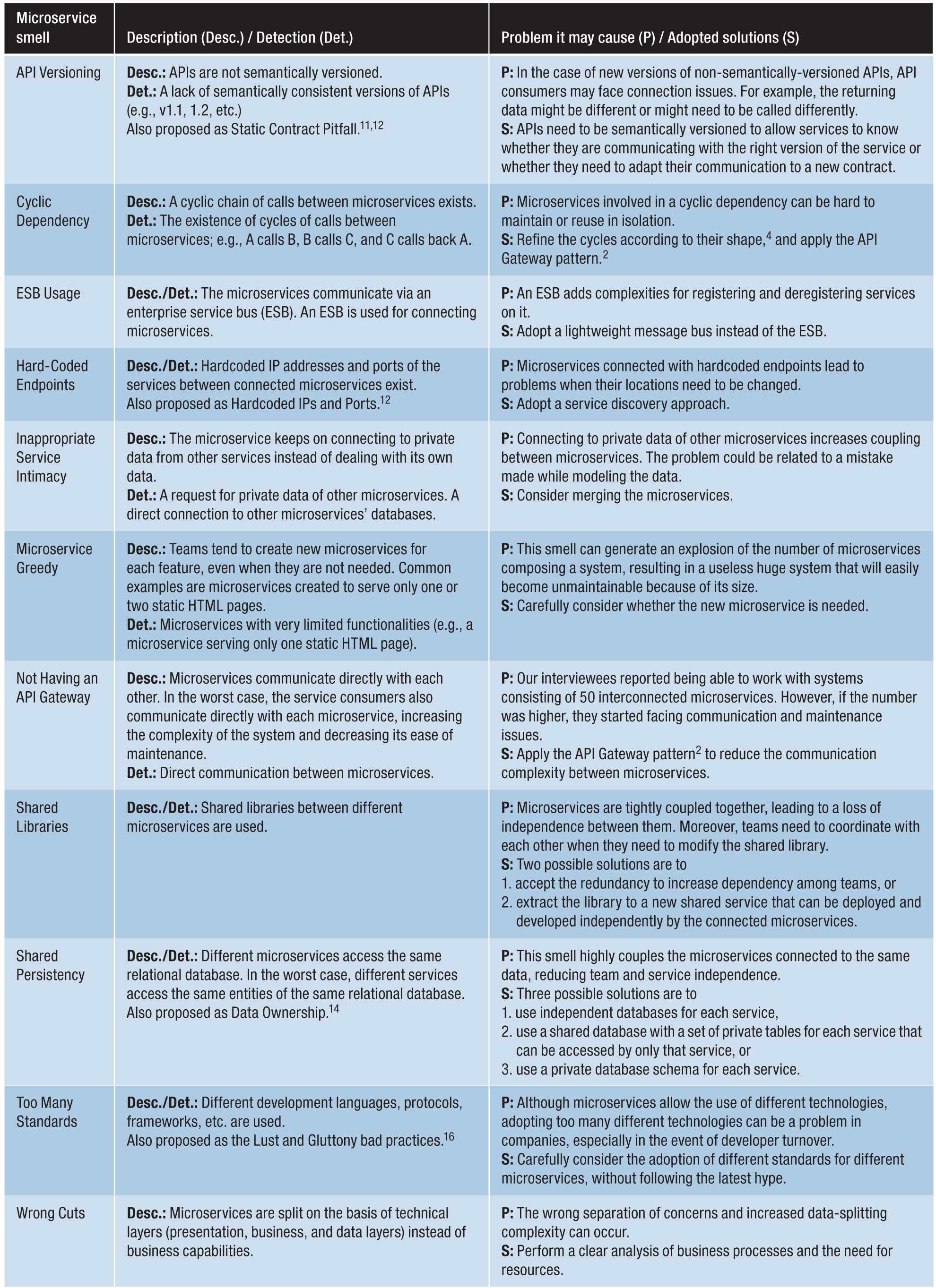
In order to identify a set of microservice-specific bad smells, researchers collected examples of bad practices by interviewing 72 microservice developers. Then, they classified the bad practices into a catalog of 11 microservice-specific bad smells frequently considered harmful by practitioners.

No inexperienced participants, such as students, academics, or nonindustrial practitioners, were considered for the interviews. Of all the interviewees, 36% were software architects, 19% were project managers, 38% were experienced developers, and 7% were agile coaches. All the interviewees had at least five years of experience in software development.

The practitioners reported a total of 265 different bad practices together with the solutions they had applied to overcome them. Here's a list of the resulting smells, together with their descriptions and the possible solutions indicated by the practitioners.Catalog of microservice smells.Catalog of microservice smells.
The results can be used by practitioners and researchers as a guideline to avoid experiencing the same difficult situations in the systems they develop.

The authors of the study were Davide Taibi, an assistant professor  of software engineering at the Tampere University of Technology and Valentina Lenarduzzi, postdoctoral researcher at the same school.


About Lori Cameron

Lori Cameron is a Senior Writer for the IEEE Computer Society and currently writes regular features for Computer magazine, Computing Edge, and the Computing Now and Magazine Roundup websites. Contact her at l.cameron@computer.org. Follow her on LinkedIn.

LATEST NEWS
From Isolation to Innovation: Establishing a Computer Training Center to Empower Hinterland Communities
IEEE Uganda Section: Tackling Climate Change and Food Security Through AI and IoT
Blockchain Service Capability Evaluation (IEEE Std 3230.03-2025)
Autonomous Observability: AI Agents That Debug AI
Disaggregating LLM Infrastructure: Solving the Hidden Bottleneck in AI Inference
Read Next

From Isolation to Innovation: Establishing a Computer Training Center to Empower Hinterland Communities

IEEE Uganda Section: Tackling Climate Change and Food Security Through AI and IoT

Blockchain Service Capability Evaluation (IEEE Std 3230.03-2025)

Autonomous Observability: AI Agents That Debug AI

Disaggregating LLM Infrastructure: Solving the Hidden Bottleneck in AI Inference

Copilot Ergonomics: UI Patterns that Reduce Cognitive Load

The Myth of AI Neutrality in Search Algorithms

Gen AI and LLMs: Rebuilding Trust in a Synthetic Information Age

FacebookTwitterLinkedInInstagramYoutube
Get the latest news and technology trends for computing professionals with ComputingEdge
Sign up for our newsletter