Chinese Researchers Develop Advanced Monitoring System to Keep Children in China’s Big Cities Safe
By Lori Cameron
As the urban population of China explodes, parents grow more concerned about the dangers that threaten their children’s safety in the big city. A child walking the city streets alone could be hit by a car, physically attacked, or kidnapped. It's a parent's worst nightmare.
But, now, parents have a new way of keeping a remote eye on their children as they walk to school, cross the street, or play at the park. It's called ChildGuard, an advanced child monitoring application to help parents and guardians monitor their children, 24/7.
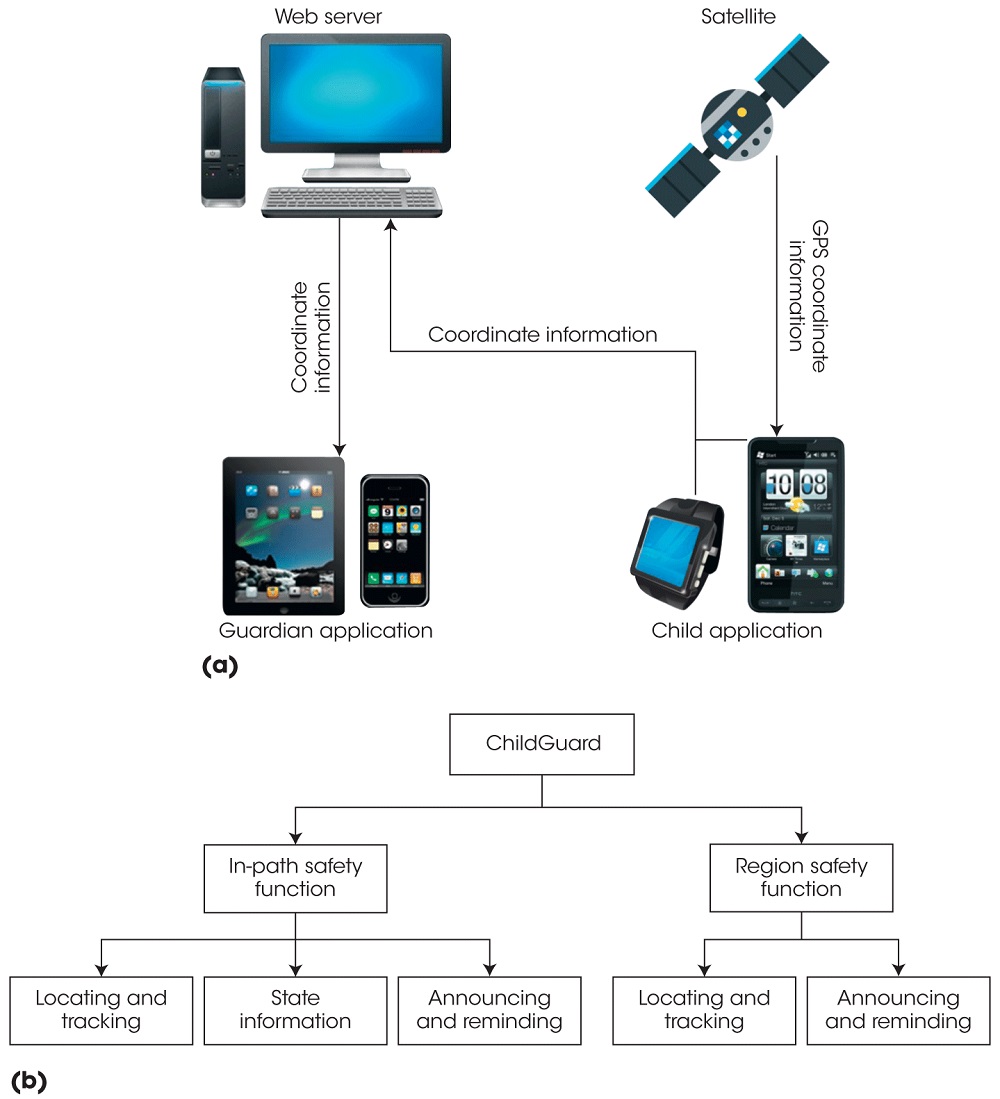
While dangers such as accidents, physical harm, and abductions abound, parents can keep track of their child's location and activities using smartphones and other wearables. If something goes wrong, parents or the app itself can warn children of danger.
Parents and guardians "need ways to better monitor their children, but typical security measures focus on preventing theft or other illegal actions and aren’t well suited for monitoring children. For example, two typical measures include hiring manned guards or using video surveillance, but guards aren’t practical or affordable when it comes to monitoring children, and video surveillance systems usually have blind zones," write Zhigang Gao, Hongyi Guo, Yunfeng Xie, and Yanjun Luo of Hangzhou Dianzi University, and Huijuan Lu and Ke Yan of China Jiliang University in their article "ChildGuard: A Child-Safety Monitoring System," which appears in the October-December 2017 issue of IEEE Multimedia. (Login may be required for full text.)
The authors have designed ChildGuard with an in-path safety function that monitors children wherever they are and a region safety function that makes sure children stay within a designated area.
The In-Path Safety Function
The in-path safety function locates the child and sends the coordinates to the caretaker’s phone. The system uses smart technology to determine any dangers that are or could happen to the child and submits warnings.
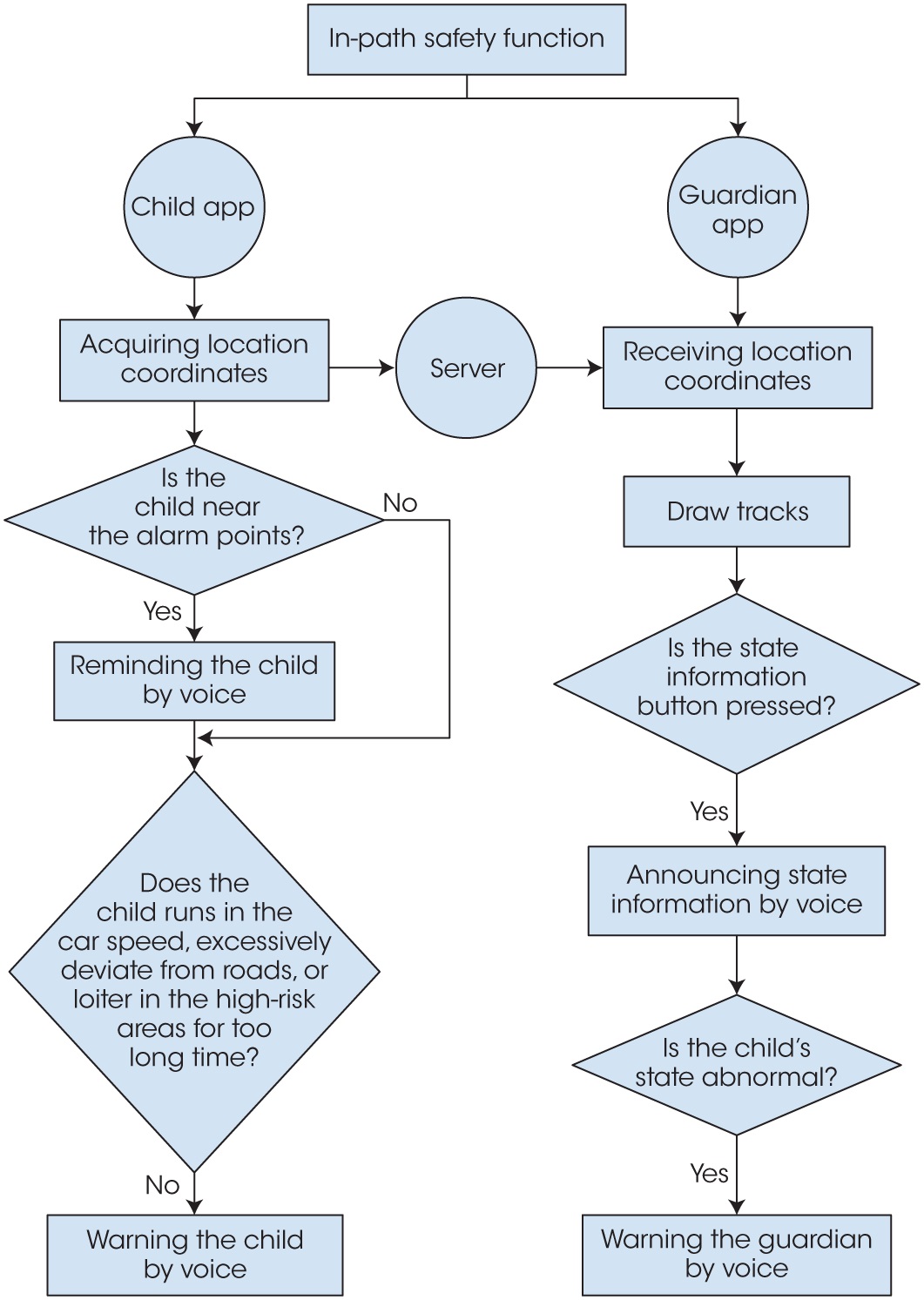
“If the child is near the alarm points, such as a traffic light intersection, the child application reminds the child by voice to pay attention to safety. If there are other abnormal conditions, such as the child’s speed reaches that of a moving car (indicating a possible abduction), or if the child seems to excessively deviate from the designated path or is loitering in a high-risk area, the child application sends warning messages to the guardian application via the web server and sends a voice warning to the child,” write the authors.
The Region Safety Function
The region safety function allows caretakers to establish a polygonal play area for children, beyond which they are not allowed to go.
"If the child is near the boundary of the safety regions, ChildGuard will remind the child not to cross the boundary. If the child is crossing the boundary, ChildGuard will issue a voice alarm, telling the child to turn back immediately. ChildGuard will also send a warning message to the guardian application via the web server, telling the guardian to take appropriate measures," write the authors.
The authors have compared the ChildGuard system to other systems including Embedded Lockets and a system based on geo-fencing and found that ChildGuard has higher positioning accuracy and better real-time communication than similar systems.
"Our ChildGuard system for mobile devices can help guardians better monitor children. With future work, we plan to add scenario-sensing functions to detect the children's voices and to take pictures of the children being monitored. We also hope to extend ChildGuard to indoor monitoring applications using indoor positioning and motion recognition," say the authors.
Research on the care, safety, and education of children in the Computer Society Digital Library
Login may be required for full text.
- Using Intelligent Agents to Identify Missing and Exploited Children
- Pervasive Computing and Autism: Assisting Caregivers of Children with Special Needs
- Teaching Communication Skills to Hearing-Impaired Children
- Does Hypermedia Really Work for Tutoring Children?
- Beeping Socks and Chirping Arm Bands: Wearables That Foster Free Play
- Pervasive Computing in Play-Based Occupational Therapy for Children

About Lori Cameron
Lori Cameron is a Senior Writer for the IEEE Computer Society and currently writes regular features for Computer magazine, Computing Edge, and the Computing Now and Magazine Roundup websites. Contact her at l.cameron@computer.org. Follow her on LinkedIn.


